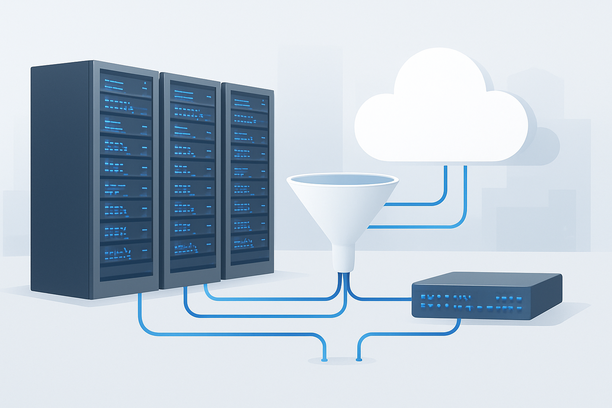
A smart B2B hosting sales funnel automatically qualifies prospects, scores their purchase intent, and routes them to the most effective sales channel, transforming a passive list of leads into a prioritized pipeline for your sales team.
Overview: Moving Beyond a Static Funnel Diagram
For most hosting resellers and agencies, the sales funnel is a static document—a series of stages defined in theory but managed manually in practice. The result is predictable: sales reps spend hours chasing cold leads while hot prospects wait, interest cools, and high-value opportunities slip through the cracks. The transition to a "smart funnel" involves embedding automation and behavioral triggers at each stage to handle initial qualification, scoring, and routing, freeing human capital to focus on closing deals. This operational shift turns your funnel from a reporting chart into an active revenue engine.
What Defines a "Smart" Funnel for Hosting Resellers?
A smart funnel is an operational system that uses predefined rules and automation to act on prospect behavior without manual intervention. Instead of just tracking a lead's progress, it actively scores their intent based on actions like visiting a pricing page multiple times, downloading a technical spec, or engaging with a webinar on infrastructure scaling. This score determines whether a lead is automatically nurtured with more content or immediately routed to a sales representative for a high-touch consultative process.
The Core Components of Automation
Building this system requires integrating your marketing platform with a CRM and potentially a sales engagement tool. The key is setting up clear, rule-based workflows. For instance, a lead who reaches a score of 75 (out of 100) might be automatically tagged as "Sales Qualified" and assigned to a senior sales rep, while a lead at 50 might trigger a targeted email series addressing their apparent interest in dedicated server security features.
How Do I Build the Qualification Framework for Hosting Products?
The framework starts by defining the criteria that signal a genuine B2B hosting opportunity. This goes beyond basic demographics and focuses on firmographic data (company size, industry) and behavioral intent. Your goal is to create a scoring model that reflects your specific product mix and sales goals.
Step 1: Map Actions to Intent Signals
Not all actions are equal. A click on a shared hosting banner is a low-intent signal. A request for a consultation on dedicated server colocation is a high-intent signal. Your framework must assign weighted points to these actions.
| Funnel Stage | High-Value Trigger (Higher Point Value) | Low-Value Trigger (Lower Point Value) | Automated Action |
|---|---|---|---|
| Awareness | Filling out a contact form | Visiting the blog | Tag as "General Interest," add to newsletter |
| Consideration | Visits "Dedicated Server Pricing" page twice | Visits "What is a VPS?" glossary page | Add to "Infrastructure Consideration" segment |
| Intent | Submits a quote request for managed cloud | Downloads a free comparison whitepaper | Notify sales rep if score >70; else, add to nurture |
| Evaluation | Accepts a calendar invite for a demo | Watches 75% of a webinar on data center security | Route to sales rep for personalized follow-up |
Step 2: Align Scores with Service Tiers
A prospect actively researching enterprise-grade dedicated servers with specific bandwidth and location requirements warrants a different sales path than someone looking for basic shared hosting. Your scoring system should differentiate these, allowing you to allocate your most experienced sales talent to high-complexity, high-revenue deals.
What Content Triggers Move Hosting Prospects to Action?
Content is the fuel for your automation engine. Each piece must be designed to elicit a measurable action that feeds your scoring model. The key is creating content that directly addresses the pain points of specific B2B segments at different funnel stages.
Building a Content-to-Action Matrix
| Target Audience Segment | Funnel Stage | Content Asset | Desired Action | Scoring Implication |
|---|---|---|---|---|
| CTO of a growing SaaS | Interest | Whitepaper: "Reducing Downtime Costs: A SaaS Infrastructure Guide" | Download PDF (+15 points) | |
| E-commerce Operations Manager | Consideration | Webinar: "Scaling for Peak Traffic: Cloud vs. Bare Metal" | Live Attendance (+20 points) | |
| IT Manager, Multi-site Brand | Intent | Interactive Tool: "Calculate Your Ideal Data Center Location" | Use Tool & Submit Email (+30 points) | |
| Agency, Managing Client Sites | Evaluation | Case Study: "How Agency X Reduced Client Onboarding Time by 40%" | Request Case Study PDF (+10 points) |
This matrix ensures every piece of content has a clear lead-generation purpose and contributes directly to the automated qualification process.
How Do I Automate the Quote-to-Close Workflow?
Automation shouldn't stop at lead qualification. The handoff from marketing to sales and the subsequent quote process can also be streamlined. This reduces response time—a critical factor in B2B sales—and ensures a consistent, professional experience.
Implementing a Rule-Based Quote Delivery System
When a lead's score crosses a predetermined threshold and they perform a high-intent action (like using a pricing calculator and clicking "Get a Quote"), automation can immediately generate a preliminary proposal. For a B2B audience, this isn't a generic PDF. It should be a templated but personalized document reflecting their stated needs—for example, a proposal for a specific rack unit in a specific location with included managed services.
Tools within a provider's client portal can support this. For instance, a streamlined process for clients to purchase hosting with clear configuration steps reduces friction once a decision is made. The smart funnel extends this clarity backwards, making the quote itself a seamless step toward that simple final transaction.
Building the Sales Routing Protocol
The final piece of automation is ensuring the right lead reaches the right sales resource instantly. A one-size-fits-all sales team is inefficient. Your protocol should match the lead's value and complexity with the rep's expertise.
A Practical Routing Checklist
- Lead Score 0-40: Automatically enrolled in a long-term email nurture sequence focused on education.
- Lead Score 41-70: Assigned to a Business Development Representative (BDR) for a qualifying call within 24 hours.
- Lead Score 71-90: Immediately routed to a Senior Account Executive specializing in cloud solutions, with a calendar booking link sent to the prospect.
- Lead Score 91+: Notifies both the Account Executive and a sales manager for priority handling; may include a pre-populated quote draft.
- Negative Scoring Signals: Repeated unsubscribes, long periods of inactivity, or visiting only career pages. Automatically down-score or archive to maintain list health.
This protocol ensures high-value prospects get immediate, expert attention, optimizing your sales team's time and increasing close rates for your most important deals.
Integrating Operational Data for Smarter Routing
The smartest funnels don't just look at marketing signals; they incorporate operational data. Information about a prospect's current infrastructure can predict their upgrade path. While this data often comes from sales conversations, you can also gather insights through content interactions—like a prospect downloading a guide on migrating from a VPS to a dedicated server. This signals a likely future need for more complex services and higher revenue potential, warranting a more proactive sales approach. Simple operational features, like a client area that facilitates DNS management and user account permissions, also reduce post-purchase friction, improving client retention which is the ultimate goal of the funnel.
Frequently Asked Questions (FAQ)
How do I identify the first high-intent signals for a hosting lead?
The most reliable early signals are repeat visits to high-commitment pages. A prospect who returns to your dedicated server pricing page, visits a technical specifications document, or interacts with a live chat asking about SLAs is demonstrating genuine purchase intent that should trigger a higher score in your system.
What tools are necessary to build this automated funnel?
At a minimum, you need an email marketing/automation platform (like HubSpot or ActiveCampaign) that supports lead scoring and workflows. This should be integrated with a CRM (like Salesforce or Pipedrive) for sales visibility. Adding a website analytics tool that tracks page-level engagement (like Google Analytics 4) and potentially a chatbot for real-time engagement will complete the core stack.
How do we handle leads that don't fit the scoring model perfectly?
Your model should account for "manual overrides." Sales reps must be able to adjust a lead's score based on qualitative data from conversations, such as budget authority or a specific project timeline. The system should flag leads that engage in un-scored but potentially important behaviors for review.
Can I run this smart funnel strategy with a small sales team?
Absolutely. In fact, a small team benefits most from it. Automation handles the low-value, repetitive qualification tasks, allowing your limited sales personnel to focus exclusively on the handful of leads that automation has identified as the most promising and closest to a purchasing decision.
How often should we revisit and adjust our funnel scoring rules?
You should perform a full review quarterly. Analyze which high-scoring leads converted and which didn't. Look at which low-scoring leads eventually purchased. This data will reveal flaws in your initial assumptions and allow you to reweight actions and adjust point values to better reflect real-world buying behavior.
Conclusion and Next Steps
Implementing a smart B2B hosting sales funnel moves your revenue operation from reactive to predictive. By automating qualification, scoring intent with precision, and routing prospects intelligently, you build a system that consistently prioritizes high-value opportunities and maximizes the efficiency of your sales resources.
Start by auditing your current lead sources and identifying the top 3-5 actions that truly signal purchase intent for your specific hosting services. Build a simple scoring model around those actions and implement one automated workflow for the highest-intent trigger. For the operational backbone that supports this entire system—from streamlined client onboarding to efficient service management—explore the robust platform and hosting plans designed to empower resellers and agencies.